


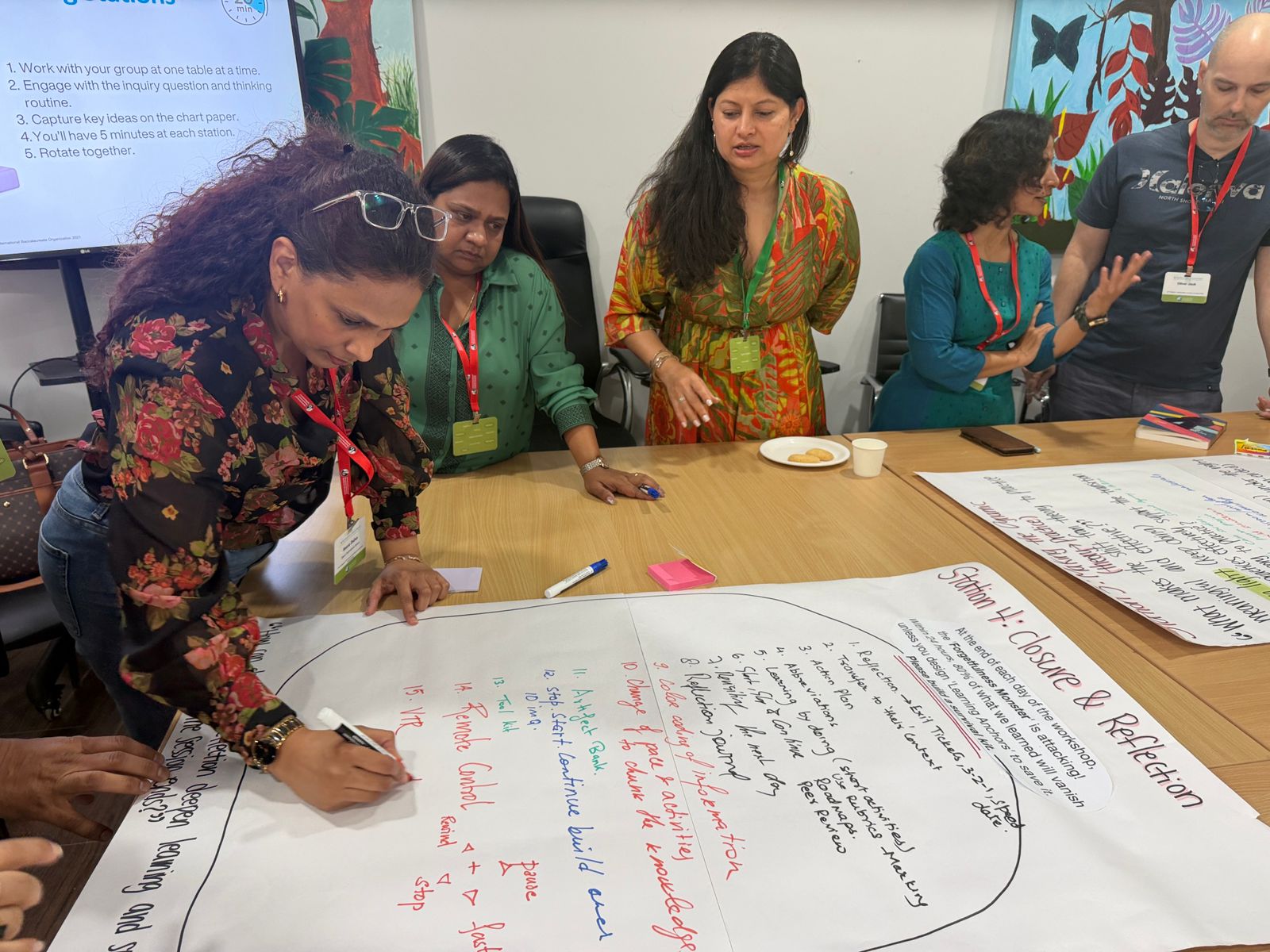
20 Years Inside Schools: Why Dev'Sh Group Sees What Other Consultants Miss
Most consultants walk into schools with a clipboard. We walk in with experience, empathy, and a genuine understanding of the education ecosystem
That one sentence is not a tagline. It is the entire reason Dev'Sh Group exists, the reason our recommendations actually land, and the reason school leaders tell us we are the first consulting team that has ever made their staff feel understood rather than evaluated.
And that distinction matters.
Because when people feel understood, they are far more willing to embrace change, engage in the process, and turn recommendations into real outcomes. Yet, despite the importance of this human connection, it is often missing from traditional education consulting.
To understand what makes our approach different, it helps to first look at what is broken in the way most education consulting works today and why it continues to fall short for schools that genuinely need support.
The Problem With Most Education Consulting
Here is a scene that plays out in schools more often than anyone admits:
• A consultant arrives. Two days of observations, a few teacher interviews, some data review.
• Day three: a 60-slide deck. Big words. Bold recommendations.
• The principal nods. Teachers sit politely.
• The consultant leaves. Everyone exhales. Nothing changes.
Why does this keep happening?
Because the consultant was diagnosing a body they had never lived in.
You cannot fully understand a school if you have never experienced the weight of teaching in one, the 7pm parent calls after a full day, the guilt of leaving a struggling child behind, the quiet frustration of a policy that makes no sense on the ground.
This is not about bad intentions. It is a structural problem.
When your experience lives outside the classroom, there are things you simply cannot see, no matter how sharp your research skills are.
What 20 Years Actually Looks Like
Dev'Sh Group was not built in a boardroom. It was built inside schools.
Government schools. Private schools. Urban campuses. Low-resource classrooms. High-performing institutions. Schools in crisis and schools quietly doing brilliant work.
Over two decades, our team has collectively:
• Taught across primary, middle, and secondary levels
• Served as department heads, curriculum coordinators, and school leaders
• Designed academic programmes from scratch and watched them succeed or fail
• Managed staff through policy changes, school mergers, and post-pandemic chaos
• Sat across from parents who were angry, scared, or completely lost
• Navigated school management committees, education boards, and district politics
That experience is not something you learn in a workshop.
It is earned through years of showing up, making mistakes, adjusting, and figuring out what actually moves a school forward versus what just looks good on paper.
Three Things We See That Others Miss
After working with dozens of schools as consultants, we have noticed the same blind spots appear again and again.
Here are the three that matter most:
1. The Hidden Teacher Morale Problem
Test scores and attendance are the numbers everyone tracks.
But none of those numbers tell you:
• That your best teacher is quietly looking for another job
• That half the staff stopped trying new ideas two years ago
• That people smile in meetings but feel invisible to leadership
Teacher morale is the engine of a school. When it runs low, everything suffers classroom energy, student relationships, willingness to try anything new.
But it rarely shows up in data. So consultants who live by data miss it entirely.
We catch it because we know what it feels like from the inside. We know the difference between a team that is tired but still fighting and one that has quietly given up.
2. The Policy-Practice Gap
Almost every school has a gap between what its documents say and what actually happens in classrooms.
Here is what that looks like in practice:
• Lesson planning policies that three people follow
• Feedback guidelines being implemented by two teachers out of twenty
• Inclusion frameworks that exist on paper but have never been explained to anyone
We have walked into schools that looked excellent on paper and found classrooms where students had not received feedback on written work in six weeks.
Identifying this gap is not about blame.
It is about understanding where the real work is. And it completely changes what the intervention needs to be.
3. The Cultural Current Running Beneath Everything
Every school has a culture. But culture is not a motto on the wall.
It is the unspoken agreement about how things actually work here:
• Who gets heard and who does not
• What gets rewarded and what gets quietly punished
• What people say in meetings versus what they say in the car park
A school can have a culture of fear dressed up as high standards.
A culture of burnout dressed up as dedication.
A culture of exclusion dressed up as excellence.
Identifying the real culture; not the aspirational one and takes years of reading rooms. You develop a feel for it. And once you see it clearly, you stop trying to install solutions on top of it and start working with what is actually there.
What Our Work Actually Looks Like
We will be honest: we are not the fastest, and we are not the cheapest.
If you need a 48-hour audit and a polished PDF, we are not your team.
What we do instead:
• Spend real time in classrooms, not just a walkthrough
• Have honest conversations with teachers, not just leadership
• Run listening sessions with students, who always know more than adults think
• Look at what is working, not just what is broken
• Build recommendations around your actual staff and your actual resources
• Stay through implementation and we do not hand over a report and disappear
We have worked with schools in crisis. Schools that were already good and wanted to be great. School boards trying to understand why one campus thrives while a sister campus struggles.
In every case, the difference was not our methodology. It was our perspective.
A Final Word
Education consulting has a credibility problem.
Too many schools have spent real money on:
• Recommendations that never landed
• Initiatives that collapsed in month two
• Frameworks that sounded brilliant but had no relationship to reality
We started Dev'Sh Group because we believed there was a better way.
One rooted in genuine classroom experience. In honest relationships with the people inside schools. In the humility to know that every school is different and deserves solutions built for its specific reality not copied from somewhere else.
Twenty years inside schools taught us that the answers are almost always already there ; in the people, in the relationships, in the quiet things no one has had the courage to say out loud yet. Our job is to help surface them.
If you are a school leader wondering whether your school is reaching its potential; we would love to talk.
Not to sell you a programme. Just to listen first.
Because that is always where it starts.
🌐 www.devshgroup.com
📧 contact@devshgroup.com
📱 8796315550